Latest Technology in Needle Detector Machine for Textile Factories
The textile and garment industry demands high-quality products, reliable production processes, and strict safety standards. One of the most important technologies used to maintain garment safety is the Needle Detector Machine. Modern textile factories are increasingly adopting advanced needle detection systems to identify broken needles, metal fragments, and other unwanted metallic contaminants before finished garments reach customers.
With technological advancements, today’s needle detector machines offer improved sensitivity, stable performance, automatic detection, and user-friendly controls. Lunex Machine provides advanced solutions designed to support garment manufacturers in achieving better quality control and efficient production.
What Is a Needle Detector Machine?
A Needle Detector Machine is an industrial inspection system designed to detect metallic contaminants, particularly broken sewing needles, hidden inside garments, fabrics, and other textile products. During garment manufacturing, sewing needles can occasionally break and leave small metal pieces inside the finished product.
A high-sensitivity Garment Needle Detector Machine helps manufacturers identify these contaminants before products are packed and shipped. This makes needle detection an important quality-control step for garment exporters, textile factories, apparel manufacturers, and production units.
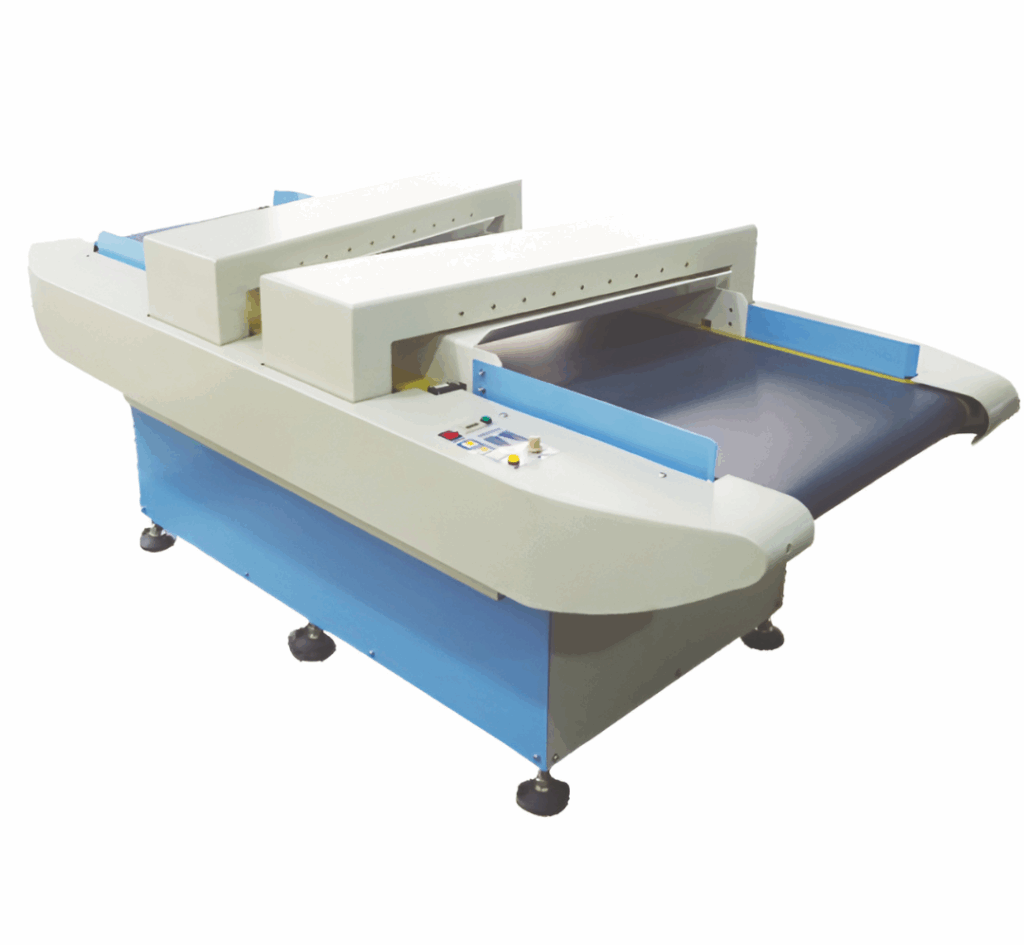
Latest Technology in Needle Detector Machines
Modern Needle Detector Machines have evolved significantly compared with conventional detection equipment. Advanced systems combine sensitive electromagnetic technology, digital controls, conveyor automation, and safety features to improve inspection accuracy.
1. High-Sensitivity Metal Detection
One of the most important technological developments is enhanced detection sensitivity. Modern machines are engineered to detect very small metallic particles and broken needle fragments.
High sensitivity helps textile manufacturers improve product safety while reducing the possibility of contaminated garments passing through final inspection.
2. Advanced Digital Control Systems
New-generation needle detectors often incorporate digital control panels that make machine operation easier. Operators can adjust inspection settings, monitor machine status, and manage detection parameters through an intuitive interface.
Digital controls also help manufacturers maintain consistent inspection performance during long production shifts.
3. Automatic Detection and Rejection
Automation is another major development in textile inspection technology. Advanced machines can automatically identify metallic contamination and activate an alarm or stopping mechanism when a problem is detected.
Depending on the machine configuration, the defective product can then be removed for further inspection. This reduces dependence on manual checking and helps improve production efficiency.
4. Adjustable Sensitivity
Different fabrics and garment products may require different inspection settings. Modern Fabric Needle Detector Machines provide adjustable sensitivity levels to accommodate various product types.
This flexibility allows manufacturers to optimize inspection performance according to garment thickness, fabric construction, product size, and production requirements.
5. Conveyor-Based Inspection
Conveyor-type needle detector systems provide continuous product inspection. Garments can move through the detection area at a controlled speed, allowing factories to inspect larger quantities efficiently.
This technology is particularly useful for high-volume garment production where manual inspection would require significant time and labor.
Benefits for Textile and Garment Factories
Investing in advanced needle detection technology can provide several operational and quality benefits.
Improved Product Safety
The primary purpose of a needle detector is to prevent sharp metal fragments from reaching consumers. Detecting broken needles before shipment helps manufacturers maintain higher product safety standards.
Better Quality Control
A reliable Needle Detector Machine adds an additional inspection stage to the manufacturing process. It can help textile companies identify metallic contamination that may not be visible through ordinary visual inspection.
Higher Production Efficiency
Automated detection reduces the need for repetitive manual checking. Operators can process garments systematically while the machine performs continuous inspection.
Reduced Product Returns
Contaminated garments can create quality complaints, returns, and reputational damage. An effective needle detection process can help manufacturers reduce these risks by identifying potential problems before products leave the factory.
Support for Export Manufacturing
Garment exporters often need to meet strict buyer and product-safety requirements. Advanced needle detection equipment can support factories in maintaining consistent quality-control procedures for domestic and international markets.
Why Choose Lunex Machine?
Lunex Machine focuses on providing modern textile machinery designed for the requirements of garment and textile manufacturers. Its needle detection solutions are developed to support accurate inspection, dependable operation, and efficient production workflows.
For factories looking for a reliable Garment Needle Detector Machine, choosing equipment with suitable sensitivity, operating controls, conveyor performance, and safety features is essential. Lunex Machine can help businesses select suitable needle detection solutions based on their production requirements.
Applications of Needle Detector Machines
Advanced needle detection equipment can be used across various textile and garment manufacturing applications, including:
- Garment manufacturing units
- Apparel export factories
- Textile production facilities
- Home textile manufacturing
- Children's clothing production
- Underwear and intimate apparel manufacturing
- Bedding and textile product manufacturing
- High-volume garment production lines
These applications demonstrate why needle detection has become an important part of modern textile quality assurance.
Future of Needle Detection Technology
The future of needle detection is expected to focus on greater automation, improved sensitivity, easier digital operation, and better integration with production lines. As textile manufacturers continue to adopt smart manufacturing practices, inspection equipment will increasingly become part of connected quality-control systems.
Factories can benefit from machines that provide consistent detection performance while minimizing unnecessary production interruptions. Advanced monitoring and automation may also help manufacturers collect useful production and inspection information for quality management.
Conclusion
The latest technology in Needle Detector Machines is helping textile factories improve product safety, quality control, and production efficiency. High sensitivity, digital controls, adjustable detection settings, conveyor inspection, and automated alert systems make modern machines valuable tools for garment manufacturers.
For textile businesses seeking dependable inspection technology, Lunex Machine offers solutions designed around the needs of modern garment production. By implementing advanced needle detection systems, manufacturers can strengthen their quality-control processes, protect consumers, and build greater confidence in their finished products.
Lunex Machine – supporting safer, smarter, and more efficient textile manufacturing with advanced needle detection technology.


Comments
Post a Comment